
Head Office
TAPES WORLD
#147, Shop No. 004, Ramaiza Complex, Near Vishal Electronics, S.P. Road, Bengaluru-560002
Branch
TAPES WORLD
#59, ground floor, below HI ALT EXPERT,
8th main, J C industrial area, Bengaluru-560062
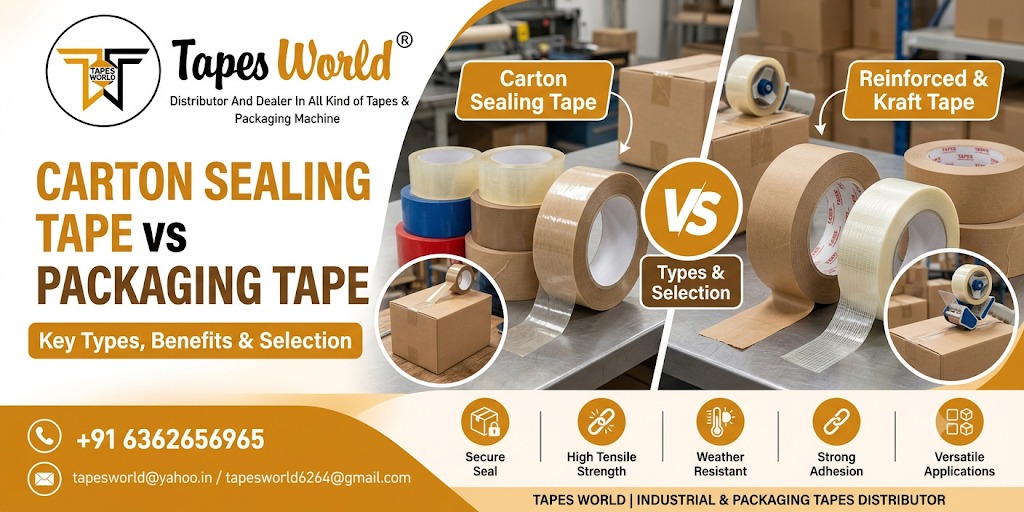
Carton sealing tape plays an important role in protecting products during storage, handling and transportation. The
right tape helps keep cartons securely closed, reduces the risk of accidental opening and supports a professional
packing process. However, not every packaging tape performs equally on every carton. Carton material, surface
condition, package weight, temperature and shipping conditions all influence tape performance. This guide explains
the common types of carton sealing tape, their benefits and the factors to consider when selecting one for your
business.
1. What Is Carton Sealing Tape?
Carton sealing tape is a pressure-sensitive adhesive tape used to close and secure corrugated cardboard boxes and
other packaging. It commonly consists of a backing material—such as BOPP film or paper—and an adhesive coating.
When pressure is applied, the adhesive bonds with the carton surface. It is widely used in warehouses, e-commerce
operations, manufacturing units, distribution centres and logistics facilities.
2. Common Types of Carton Sealing Tape
BOPP carton sealing tape: Biaxially oriented polypropylene (BOPP) tape is widely used for general carton sealing. It
is available in clear, brown and other colours, with different thicknesses and adhesive systems.
Acrylic adhesive tape: Acrylic-based tape is often selected for consistent performance and storage stability. It can be
suitable for applications where cartons may be stored for extended periods, subject to the product specification.
Hot-melt adhesive tape: Hot-melt tape is commonly used for fast packaging operations and can provide strong initial
tack on many carton surfaces. Performance depends on adhesive formulation and conditions.
Solvent-based adhesive tape: Certain solvent-based formulations are designed for demanding applications. Check
technical data and suitability for the actual packaging environment.
Tapes World | SEO Blog Content Page 2
Printed carton tape: Printed tape can display a brand name, handling message or security notice while sealing the
carton.
3. Benefits of Using the Right Packaging Tape
The correct carton sealing tape helps maintain package closure throughout handling and transit. It can reduce
re-taping and packaging interruptions, support faster packing workflows, improve presentation and help protect goods
from dust or accidental exposure. Printed tape can also reinforce brand visibility. These benefits depend on choosing a
tape matched to the carton and operating conditions; tape alone cannot compensate for damaged cartons or
unsuitable packing methods.
4. How to Choose the Right Carton Sealing Tape
Consider carton weight and size: Heavier or larger cartons may need a wider or stronger tape and an appropriate
sealing pattern. Follow packaging specifications and test under real conditions.
Check the carton surface: Recycled corrugated board, dusty surfaces and rough fibres can affect adhesion. Choose
a product specified for the surface and keep cartons clean and dry.
Understand temperature and storage: Cold warehouses, hot transport conditions and long storage periods can
influence adhesive performance. Review the tape manufacturer's recommended application and service temperature
ranges.
Select suitable width and thickness: Width affects coverage, while backing and adhesive construction affect
handling and performance. Do not choose on thickness alone; compare technical data and conduct a pack test.
Choose the right application method: Manual dispensers and automatic carton-sealing machines may require
different tape dimensions and unwind characteristics.
Test before bulk purchase: Trial the tape on your actual cartons and verify closure after stacking, handling and
transport simulation.
5. Application Tips for Better Carton Sealing
Apply tape to a clean, dry carton surface. Centre the tape over the carton joint and press it down firmly along the full
length. Use a consistent H-seal or other approved pattern when required by the package design. Avoid stretching the
tape excessively, applying it over loose dust or using damaged cartons. Store tape rolls in their original packaging in a
cool, dry place away from direct sunlight and excessive heat.
6. Common Mistakes to Avoid
Common mistakes include selecting tape only by price, using narrow tape on heavy cartons, applying tape to dusty or
damp surfaces, ignoring storage temperature, and assuming all adhesives work on every recycled board. Another
frequent issue is using more tape to compensate for poor carton quality. Review the complete packaging
system—carton strength, product weight, cushioning and sealing method—before changing tape.
7. Conclusion
Carton sealing tape is a small but essential part of reliable packaging. BOPP, acrylic, hot-melt, solvent-based and
printed options serve different packing needs. The best choice depends on carton weight, board quality, storage
conditions, sealing equipment and shipping environment. Compare product specifications and test the tape on your
own cartons before placing a large order. Tapes World can use these selection factors to help customers identify a
suitable packaging tape for their application.