
Head Office
TAPES WORLD
#147, Shop No. 004, Ramaiza Complex, Near Vishal Electronics, S.P. Road, Bengaluru-560002
Branch
TAPES WORLD
#59, ground floor, below HI ALT EXPERT,
8th main, J C industrial area, Bengaluru-560062
_1791545139792189342.png)
Choosing the right insulation tape is essential for electrical safety, reliable performance, and long-lasting protection. PVC tape and rubber tape are widely used in electrical and industrial applications, but they differ in material properties, flexibility, and intended uses. Understanding these differences helps electricians, technicians, contractors, and industries select the most suitable tape for each job.
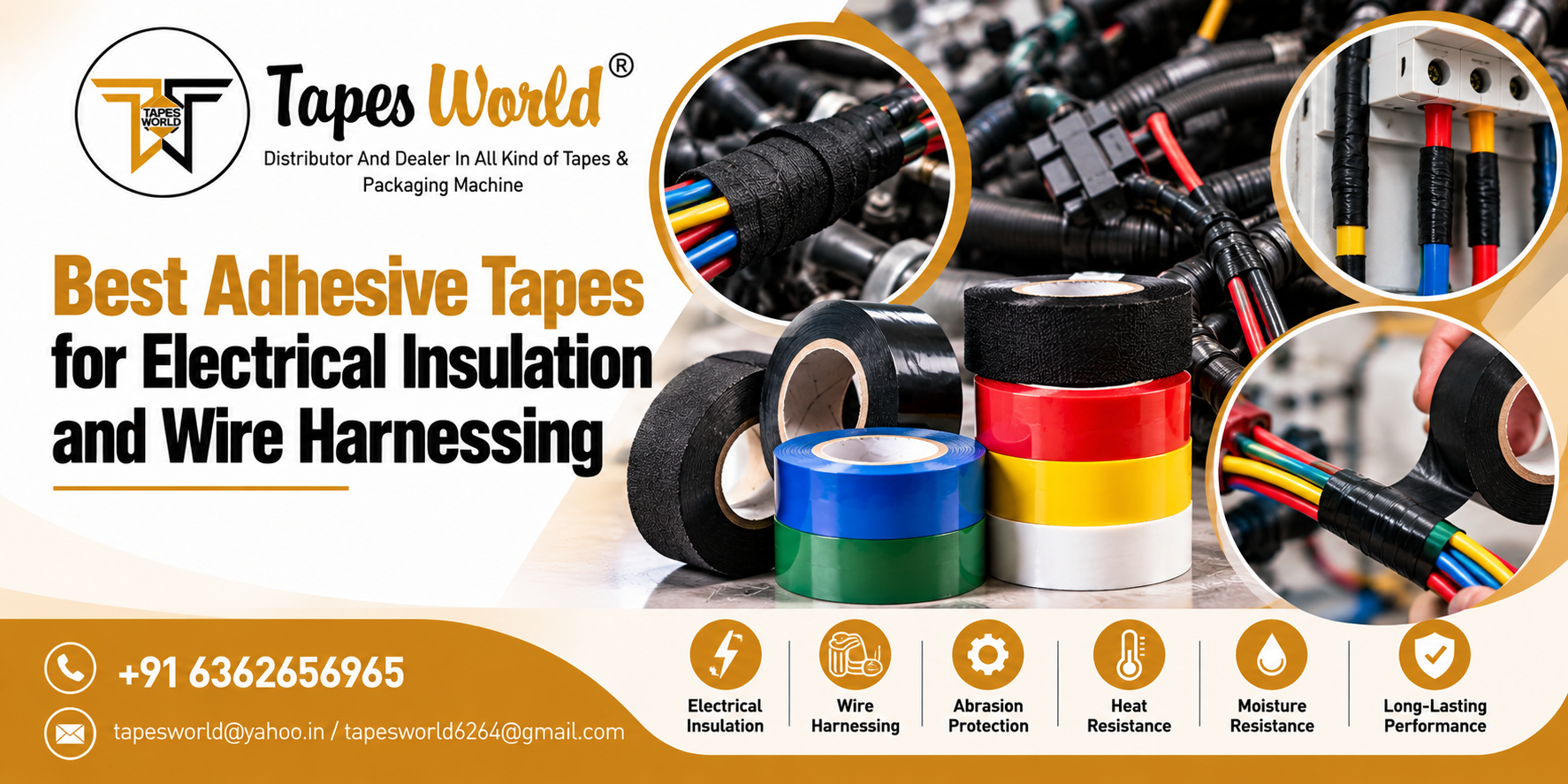
PVC (polyvinyl chloride) tape is a flexible adhesive tape commonly used for electrical insulation, wire bundling, cable identification, and general-purpose protection. It is available in multiple colours and is valued for its flexibility, ease of application, and resistance to moisture and abrasion.
Rubber electrical tape is typically made from insulating rubber compounds. Certain types are designed to stretch and conform closely around cable joints, helping create an insulating and moisture-resistant seal. Self-fusing rubber tapes bond to themselves when wrapped correctly, without relying on a conventional adhesive layer.
Material: PVC tape uses a polyvinyl chloride backing, while rubber tape uses a rubber-based insulating material.
Flexibility: Both can be flexible, but stretch and conformability vary by product. Self-fusing rubber tape is particularly useful for wrapping irregular cable shapes.
Insulation: Both types are available for electrical insulation, but their voltage ratings and approved applications differ. Always check the manufacturer's specifications.
Moisture Protection: PVC tape can resist moisture, while suitable self-fusing rubber tape can form a close-fitting moisture-resistant seal around properly wrapped joints.
Best Use: PVC tape is commonly used for general insulation, cable bundling, and colour identification. Rubber tape is often selected for specialised joint insulation and sealing applications.
Before choosing PVC or rubber tape, consider operating voltage, temperature range, moisture exposure, surface compatibility, and the requirements of the electrical installation. Check product specifications and follow applicable electrical safety standards. Rubber tape may also require an appropriate protective outer layer, depending on the application.
Never use ordinary tape as a substitute for an approved electrical repair method. Electrical work should be carried out by a qualified professional.
Selecting the right electrical insulation tape supports safer installations and dependable performance. Tapes World offers adhesive tape solutions for a range of industrial and electrical requirements.
If you are searching for PVC insulation tape, rubber electrical tape, or electrical insulation tape suppliers in Bangalore, explore Tapes World to identify a suitable product for your application.
Choose the right tape for reliable insulation and protection.